

For gas turbine operators, NOx emissions remain an environmental concern, even in a relaxed...
Low Emissions Combustor Retrofit: Ultra-Low NOx & Fuel Flexibility for B/E-Class Gas Turbines
Low Emissions Combustor Retrofit: Ultra-Low NOx & Fuel Flexibility for B/E-Class Gas Turbines
5:04
If you operate GE Frame 6B, 7B, 7E, 7EA, or 9E gas turbines, new regulations now require sub-9 ppm NOx. Many original combustors or early DLN hardware don’t meet this standard.
You have three options: install SCR, upgrade OEM combustion hardware, or retrofit with a low-emissions combustion system. This post covers how Hanwha Power’s LEC III delivers sub-5 ppm NOx on existing B/E-class turbines, proven in 100+ global sites.
What Drives NOx in Conventional Combustors
In conventional diffusion combustors, primary zone flame temperatures routinely reach 1,900-2,100°C (3,450-3,810°F). At these temperatures, thermal NOx formation accelerates significantly. The problem is compounded by pressure, residence time, and localized fuel-rich hot spots where nitrogen and oxygen react most aggressively.
First-generation DLN systems reduced NOx through lean premixed combustion but introduced new challenges: combustion instability at low loads, sensitivity to fuel composition changes, and hardware that was designed to a performance standard that many jurisdictions have since moved past.
What the LEC System Delivers
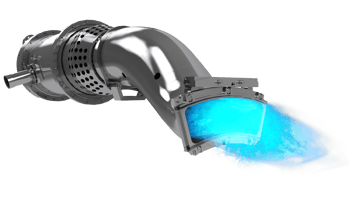
LEC is a complete combustion retrofit for B/E-class frames using advanced venturi and effusion cooling. This creates a uniform fuel-air mix, avoiding hot spots, and uses cooling to maintain stable combustion across all loads.
The result is sub-5 (LEC-III) or sub-9 (LEC-NextGen) ppm NOx at baseload, stable from startup to 50-60% load (80% without inlet bleed heat), and very low CO—meeting strict air quality standards even without post-combustion treatment.
Evaluating Your Upgrade Options
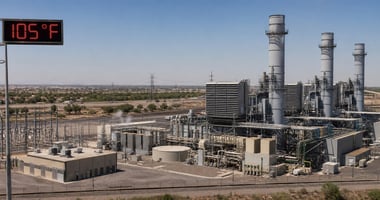
SCR remains a reliable compliance solution when DLE retrofits aren’t feasible, but it entails significant costs: capital installation costs, ongoing catalyst replacement, reagent consumption, and increased maintenance complexity. In direct comparison, when modern combustion technology achieves NOx levels equal to those of SCR, incorporating SCR adds cost without additional emissions benefit. At a power plant in Texas, a 7EA with LEC III achieved 4.75 ppm NOx in a week, allowing the operator to cancel a planned SCR and save millions. Full turndown and emissions compliance were maintained.
Fuel Flexibility Example: LNG or Hydrogen Blending
LEC’s robust design is capable of handling a mixture of fuel blends such as those coming from LNG or Hydrogen Blending and keeps NOx below 5 ppm across gas types, so fuel choice isn’t as restricted as with OEM hardware.
Hanwha Power’s combustion tech is on 350+ turbines in 30+ countries. In one 7B plant, LEC III enabled meeting a 60% NOx cut without turbine upgrades, marking the first use of ultra-low-emission combustion on 7B units.
LEC III and LEC NextGen fit GE Frame 7B, 7E, 7EA (including 7121EA and 9171E), 6B (with 6581B and DLN 1.0 or diffusion replacement), 9E, and Siemens/Westinghouse 501B platforms. LEC NextGen supports up to 32,000 factored-fired hours and 1,200 starts between inspections.
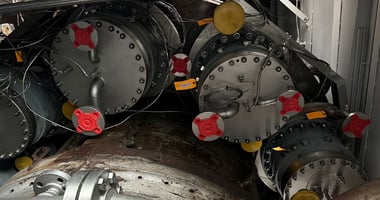
Both systems are designed for installation during a standard maintenance (CI, HGP or MI) outage. Hanwha Power provides complete project management and installation support, including combustion dynamics monitoring, emissions tuning, and commissioning support.
Making the Decision
Choose LEC III if your permit requires sub-5 ppm NOx without SCR, your existing DLN 1.0 system isn’t meeting tightening limits, or you need reliable low-load performance across the full 50-100% load range.
Choose LEC NextGen if your permit requires sub-9 ppm NOx, your capital budget favors a lower entry cost, or you’re planning a multi-unit fleet rollout and need cost-effective scalability.
The B/E-class fleet is aging but not obsolete. With the right low-emissions gas turbine combustor upgrade, these turbines can operate cleanly and reliably for another decade or more—providing the dispatchable capacity the grid needs and new equipment cannot replace in the near term.
Evaluating LEC III or LEC NextGen for your fleet? Act now—Hanwha Power’s engineering team is ready to deliver combustion retrofit assessments, permit-compliance analyses, and installation planning for Frame 7EA, Frame 6B, and other B/E-class turbines. Secure your emissions targets and operational flexibility today: Contact us to discuss your specific goals and requirements.
References:
• U.S. EPA, Combustion Turbine NOx Control Technology Memo, January 2022
• The Piping Talk, “Gas Turbine Combustion Made Simple: DLE vs WLE vs Non-DLE Explained,” August 2025
• Hanwha Power, LEC III Product Documentation, psm.com
• POWER Magazine, Oyster Creek Power 8 Case Study, 2008