
Summer 2026 is behind us. Record-breaking demand events, DOE emergency orders, and Maximum...
When the Grid Breaks Records, the Installed Fleet Is the Only Answer
When the Grid Breaks Records, the Installed Fleet Is the Only Answer
12:10
Last week, the U.S. power grid was tested in ways it hadn’t been tested in 20 years.
PJM Interconnection, the largest regional grid operator in the country covering 13 states and Washington, D.C., forecast peak electricity demand of 166,304 MW on July 2, breaking an all-time record that has stood since 2006. The U.S. Department of Energy issued emergency orders authorizing PJM to curtail data centers and waive certain power plant pollution limits to keep generation capacity online. NYISO and MISO, covering New York and 15 Midwestern and Southern states, respectively, simultaneously reached record peaks. The head of one energy-focused nonprofit called the situation a “five-alarm fire.”
This isn’t a forecast. It’s happening right now. And it exposes a structural reality the power industry has been warning about for years: demand is outpacing the grid’s ability to respond, and the installed fleet of gas turbines is the only capacity buffer available when it matters most.
What’s Driving the Crisis
Three forces are converging this summer in ways that individually would strain the grid. Together, they’re creating conditions the system wasn’t built to handle.
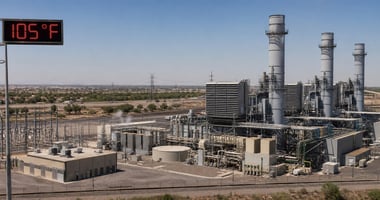
Extreme heat: NOAA forecasts above-average temperatures across much of the United States for June through August 2026, with a 61% chance of El Niño conditions and a one-in-four chance of a strong El Niño later this year, raising the risk of extreme heat events and sharp spikes in cooling demand. Humidity is pushing heat indices as high as 46°C (114°F) in some locations, while overnight temperatures offer little respite, meaning neither the grid nor the people leaning on it get a real break.
Structural demand growth: FERC projects total summer 2026 electricity consumption will reach 1,587 TWh, up 3% from summer 2025—the strongest year-over-year summer growth since 2022. Natural gas power burn is forecast to average 44 Bcf/d for the full summer and 47.9 Bcf/d across July and August. Data center load, driven by AI infrastructure buildout, is projected to grow by 25% in 2025 alone, reaching 44 GW.
A grid already stretched thin: NERC’s 2026 Summer Reliability Assessment found that aggregated peak demand across all assessment areas has increased by more than 11 GW since its 2025 summer assessment, with peak demand growing in 19 of 23 assessment areas. PJM’s own executives warned of a “fundamental mismatch between how fast demand is growing and how quickly new supply can be built and connected to the grid,” noting that new power plants now take twice as long to build and cost significantly more than before.
The result: the DOE issued emergency orders on June 30 authorizing PJM to curtail data centers and other large energy consumers with at least 50 MW of peak load, requiring them to switch to their own backup generation, with Maximum Generation, Load Management, and Hot Weather alerts all simultaneously active.
That’s the grid calling on every available resource at once.
The Installed Fleet Is the Only Capacity That Exists Right Now
When PJM issues a Maximum Generation Alert, it directs generation and transmission owners to defer maintenance, cancel testing, and bring all available capacity online. Every megawatt counts. And the hard truth is that the only megawatts available to answer that call are the ones already in service.
New gas turbine deliveries are backlogged into 2029 and beyond. Utility-scale solar and battery storage, while growing rapidly, cannot provide the dispatchable capacity needed when a heat wave pushes demand past peak for three consecutive days. Hydropower is constrained by drought conditions across the West. Nuclear retirement has reduced baseload reserves.
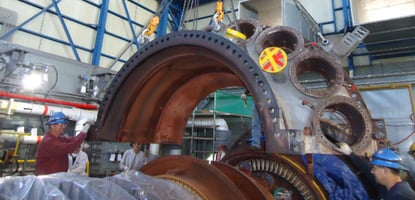
What remains is the installed fleet: GE 7F, 7EA, 6B, 501F, and 9E turbines that were commissioned years or even decades ago, now being asked to perform at levels and in operating modes their original designs didn’t anticipate.
For operators managing those units, summer 2026 is a stress test. The question isn’t whether your turbines will be called. They will be. The question is whether they’re ready to respond.
What “Ready” Actually Means in a Grid Emergency
Readiness isn’t a single condition. It’s the intersection of mechanical reliability, operating flexibility, and the ability to sustain output under extreme ambient conditions.
Mechanical reliability means components aren’t approaching the end of life during peak season. Combustion hardware, hot gas path components, and compressor sections that are worn or degraded pose a failure risk precisely when units are pushed hardest. An unplanned outage during a heat wave doesn’t just cost revenue—it reduces grid reserve margins at the worst possible moment.
Operating flexibility means units can respond quickly to dispatch signals, ramp efficiently across the load range, and sustain output at part load without combustion instability or emissions exceedances. In today’s grid, peaking units may cycle multiple times per day as renewable output fluctuates. Combustion systems that weren’t designed for frequent cycling accumulate fatigue more quickly and may produce NOx spikes during load transitions, triggering permit violations.
Ambient performance is where summer specifically creates problems. Gas turbines are air-breathing machines. As ambient temperature rises, inlet air density decreases, reducing mass flow and compressor efficiency. A turbine rated at 100 MW at ISO conditions (59°F, sea level) may produce 85-90 MW or less on a 100°F summer afternoon. For operators in high-ambient regions across the South, Southwest, and Mid-Atlantic, this output degradation is a real dispatch constraint.
Inlet air cooling systems-fogging, chilling, or evaporative cooling-can partially offset this derating, but they require properly maintained hardware and integration with turbine control systems to operate effectively during peak demand.
How Hanwha Power Supports Fleet Readiness
Hanwha Power’s entire business is built around maximizing the value and reliability of the installed gas turbine fleet. When grid emergencies expose the limits of aging or poorly maintained units, the gap between what a turbine is producing and what it’s capable of producing represents the opportunity our engineering and field service teams exist to close.
Upgrade programs that add capacity: Hanwha Power’s GTOP gas turbine optimization programs for 7F and 501F frames deliver 6-10% output improvements through advanced aerodynamic components, upgraded materials, and improved cooling designs. For a 200 MW combined cycle unit, that’s 12-20 MW of additional capacity without a new turbine, new permits, or multi-year lead times. Upgrades are installed during planned outage windows, making capacity available for the next peak season.
Combustion retrofits for fuel flexibility and emissions compliance: Hanwha Power’s FlameSheet combustion system and LEC III Ultra Low Emission Combustion System for 7EA and 6B frames deliver sub-5 ppm NOx with improved turndown and load flexibility. When the DOE waives pollution limits during grid emergencies, it’s a short-term measure. Units that already operate cleanly at single-digit NOx have more dispatch headroom in any regulatory environment—including the next heat wave.
Advanced diagnostics and monitoring: Real-time combustion dynamics monitoring, exhaust temperature analysis, and remote diagnostic support give plant teams early warning when components are trending toward distress. Catching a developing issue before it becomes an unplanned outage is the difference between a planned repair and a forced derating during peak demand. Hanwha Power’s AutoTune active combustion control system continuously optimizes fuel splits to maintain emissions compliance and combustion stability across ambient and load conditions—including the high-temperature, high-humidity conditions driving this week’s demand surge.
Rapid-response field services: Hanwha Power’s field service organization is structured for rapid mobilization. When emergent issues arise during peak season—such as a cracked transition piece, a fuel nozzle failure, or combustion instability at a critical load point—our teams and component exchange programs are designed to respond quickly, minimizing the time between discovery and return to service. Hanwha Power’s 185,000-square-foot facility in West Palm Beach provides warehousing, advanced repair capabilities, and kitting operations that reduce lead times for parts and components when operators can’t afford to wait.
Lifecycle and outage planning: Units that ran through the summer peak without issues still accumulate hours and start to affect inspection intervals. Autumn planning conversations that start now, not after a forced outage—give operators the most options to optimize the scope, timing, and cost of upcoming maintenance. Hanwha Power’s plant assessment services provide the technical baseline for those conversations.
The Longer View
This week’s heat wave will pass. Temperatures will moderate, demand will fall back from record levels, and the emergency orders will expire. But the underlying conditions driving this crisis aren’t seasonal.
PJM’s own planning now projects demand as high as 169 GW, driven by data centers, EVs, retiring plants, and hotter summers, forces that aren’t slowing down. NERC identified wide-area heat events as a primary reliability risk for summer 2026, on par with generator outages and fuel supply disruptions, and flagged the overlap of early-summer heat with spring maintenance outages as a recurring concern.
Every summer from here will test the grid harder than the last until new capacity closes the gap, and that gap won’t close before 2029 at the earliest. In the meantime, the installed fleet will be called on to perform at levels and for durations it wasn’t originally designed to sustain.
The operators who come through those tests are the ones who treated reliability as a year-round discipline, not a summer scramble. Investing in upgrades, maintaining modern combustion systems, and building relationships with service providers who can respond when it matters are decisions made during the off-peak months.
The grid emergency unfolding this week is a preview of what summer reliability will look like over the next several years. The installed fleet is the answer. Making sure it’s ready is the work.
Is your fleet ready for what summer 2026 is demanding? Hanwha Power's engineering and field service teams support gas turbine operators across GE, Siemens, and Mitsubishi frames with upgrade programs, combustion retrofits, rapid-response field services, and lifecycle management. Contact us to discuss your fleet's readiness before the next heat wave arrives.
Sources:
- Al Jazeera, "US heatwave to test power grid amid soaring AI-driven energy demand," June 30, 2026
- FERC, Summer Energy Market and Electric Reliability Assessment, May 2026
- POWER Magazine, "From Tail Risk to Design Baseline: How the Grid Is Adapting to Extreme Heat," July 2026
- Electric Choice, "PJM Emergency Order: Heat Wave Threatens Record Demand," July 1, 2026
- Semafor, "US heat wave strains grid," July 2, 2026
- NERC, 2026 Summer Reliability Assessment, May 19, 2026