
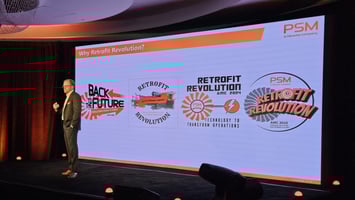
For years, PSM's Asset Managers Conference conveyed a clear message of the "Retrofit Revolution"...
PSM's 18th Annual Asset Managers Conference wrapped last week in Jupiter, Florida, and the message was unmistakable: when new equipment isn't available and uncertainty dominates every planning conversation, the installed base of gas turbines isn't just important. It's everything.
Over four days, asset managers, plant operators, and engineering teams from across North America gathered at the Wyndham Grand Jupiter to tackle the most pressing question in power generation right now: how do you extract maximum value from turbine fleets when waiting five to seven years for new equipment isn't an option?
The answer, according to operators and technical experts who filled the conference rooms, lies in proven retrofit technologies, smarter lifecycle management, and collaborative problem-solving across the industry.



"Scotty, I Need More Power!"
The conference opened Tuesday morning with keynote speaker Jeff Benoit, PSM's VP of Clean Energy Solutions, delivering a sweeping overview of global and domestic power market trends. Benoit laid out both the progress and challenges facing the energy transition, emphasizing that despite ambitious decarbonization goals, gas turbines remain central to maintaining grid reliability, integrating renewables, and keeping energy costs manageable.
His message was direct: the industry must invest, innovate, and adapt quickly to meet the transformative needs of a decarbonizing and electrifying world.
The panel discussion that followed, moderated by Jeff Benoit of PSM, brought together industry leaders to explore the challenges of today's dynamic market. Panelists included Tim Maker from Aegis Insurance, David Wu from EPRI, Mark Weber from LS Power, and Nick Tipple from CAMS, who joined remotely via the large screen behind the panel after a winter storm cancelled his flight to Florida.
The hybrid format worked seamlessly, and Tipple's virtual participation underscored one of the conference's recurring themes: flexibility and adaptability matter more than ever.
The conversation didn't sugarcoat reality. Data center demand is exploding. AI workloads are stressing grids in ways no one anticipated five years ago. Turbine wait times have stretched beyond reasonable planning horizons. And operators are caught in the middle, responsible for keeping the lights on with aging fleets and shrinking maintenance budgets.
The panel repeatedly returned to a sobering reality: the shortage of trained technical staff. Panelists noted this isn't just a power generation problem, it's an industry-wide trend that's accelerating as experienced personnel retire and demand for expertise grows.
But the panel also highlighted opportunity. Upgrades that add 6-10% capacity, combustion retrofits that improve fuel flexibility, hot section component life extensions that reduce unplanned outages, these aren't theoretical concepts. They're proven solutions being deployed at scale across the F-class fleet and beyond.
Customer-Led Round Tables: Where Real Work Gets Done
Day 3's round table sessions were the heart of the conference, and for good reason. These weren't vendor pitches or canned presentations. They were working sessions where operators shared real experiences, PSM engineers walked through technical solutions, and tough questions got honest answers.
Each attendee chose three sessions from five time slots across three parallel tracks covering critical topics:
Track 1 featured customer-led discussions on 7FA and 7E/EA experiences, plus PSM-led deep dives on 7FA and 501F retrofit roadmaps. The customer-led sessions were users-only, creating space for candid discussions about what's working, what isn't, and where operators need better solutions from the OEMs and aftermarket providers.
PSM-led sessions covered GTOP roadmaps, FlameSheet combustion operation, and practical next steps. One session tackled advanced repairs and flow testing for combustion components and hot gas path parts, combining new manufacturing capabilities with repair strategies to extend component life and maintain performance.
Track 2 focused on AI-powered monitoring and diagnostics, service engineering best practices, digital products, rotors, and combined cycle operations. The AI in Action session covered real-world M&D use cases, showing how advanced analytics catch issues before they force outages.
The service engineering session addressed maintenance best practices, common site issues, and the practical reality of managing OEM Technical Information Letters (TILs), Service Bulletins, and PSM Customer Information Letters (CILs) for fleet management.
Digital Products & Solutions explored PSM's AutoTune and FlexSuite modules, plus alternatives to model-based control systems—addressing a pain point for operators dealing with obsolete hardware.
The rotor session covered manufacturing and supply chain challenges, rotor lifetime extension strategies, and fleet management considerations across 501F, 7F, and 7E frames.
The Emerson-PSM combined cycle session explored GT upgrades and common "pinch points" in combined cycle operation, along with potential mitigation solutions, long-term maintenance best practices, and digital solutions for balance of plant optimization.
Track 3 featured vendor presentations addressing critical topics with direct customer impact:
- National Electric Coil (NEC) presented on generator stator rewinds and life extension, with Howard Moudy walking through stator deterioration causes, replacement winding design options, and the specific challenges of Global Vacuum Pressure Impregnated (GVPI) machines that have been increasing in premature failures.
- Vogt Power International and PSM delivered a joint presentation on low-load HRSG operation, addressing thermal and mechanical challenges that compromise reliability when units cycle frequently or operate at extended turndown. Marc Babine from PSM and Vignesh Bala from Vogt covered practical mitigation strategies including design considerations, operational adjustments, and maintenance practices.
- Environex explored how lowering inlet NOx has multiple downstream benefits beyond emissions compliance, including longer SCR catalyst life, lower reagent usage, and decreased salt formation on economizer sections.
- ABB and PSM (Kevin Kochirka from ABB and Ben Saunders from PSM) presented "Engineering Freedom: Inside the Shift to Open Control Platform," showing how facility owners are moving away from obsolete legacy systems to open architectures that provide greater operational autonomy, enhanced performance, and broader turndown capability.
- MeeFog delivered a 7FA flexibility operation case study showcasing inlet cooling solutions for capacity augmentation and operational flexibility.
The technology roadmap session explored additive manufacturing (3D printing) capabilities today and future applications, including how PSM is applying advanced materials and rethinking geometries to unlock performance improvements.
Technology Sessions: GTOP4, GTOP7XT, and What's Next
Tuesday afternoon's technology sessions showcased real engineering progress. Luis Rodriguez and Katie Koch presented PSM's technology roadmap, covering current and future applications designed to improve output and operational flexibility.
Greg Vogel followed with the GTOP roadmap session, detailing the latest results for GTOP4 on 7F units and introducing GTOP7XT, currently in development for 501F frames.
GTOP4.1, already under installation at a 7F-powered 2×1 CCGT, features re-aeroing of the entire turbine section, second-generation single-crystal alloy development, S1N advanced cooling via additive manufacturing integrated into modular vanes, and new multi-layer abradable coating systems for stage 1 shrouds and buckets.
With over 50 GTOP installations completed across the F-class fleet and fleet leaders surpassing 56,000 hours and 1,127 fired starts, the program has moved well beyond proof of concept. It's a mature solution with a proven track record.
NRG's 25-Year Evolution with PSM Hardware
One of the standout sessions featured Colton Whatley from NRG Energy and Mat Gartland from PSM sharing NRG's experience as one of the first and longest operators of PSM hardware. Twenty-five years of retrofits and operational data gave the presentation weight that generic case studies can't match.
They walked through the evolution of PSM's LEC (Low Emissions Combustor) platform, from early installations through incremental improvements and operational experience to date. The presentation covered real performance data, operational challenges, maintenance considerations, and the business case for continued investment in upgrades.
For operators evaluating PSM solutions, hearing directly from a customer with a quarter-century of operational experience provided invaluable perspective.
Linden Cogen: Collaboration on Unique Solutions
Yusuke Sato from JERA Americas and Oscar Jaime presented the Linden Cogen customer experience, walking through the collaboration required to develop a unique solution for their specific operating requirements. They shared performance data and operating experience to date, demonstrating how custom engineering can address site-specific constraints while maintaining reliability and performance.
Balance of Plant: Beyond the Gas Turbine
Katie Koch and Marc Babine's session on "Going Beyond the GT: Total Plant Solutions" reinforced that optimizing a gas turbine doesn't happen in isolation. Upgrades that add capacity or improve efficiency create downstream impacts on HRSGs, steam turbines, generators, condensers, and cooling systems.
The presentation emphasized PSM's plant assessment approach, which evaluates the full balance of plant to identify areas that need maintenance or upgrades to unlock the full potential of GT improvements. It's one thing to add megawatts at the turbine. It's another to ensure the steam cycle, electrical systems, and cooling infrastructure can handle it.
Jose Ruiz presented PSM's customer support overview, covering the expansion of overall capacity with the introduction of PSM North, the new repair and logistics facility in Stuart, FL that recently opened in December 2025.
Vendor Fair and Epcot-Themed Dinner
Tuesday evening's vendor fair along the Harbourside waterfront gave attendees face time with PSM's partners: ABB, Advanced Turbine Support, AGT Services, Alta Solutions, Arnold Group, Emerson, Environex, Integrity Power Solutions, Hanwha Power Systems, K-Machines, Mee Industries, National Electric Coil, NexGen, Power Services Group, RMEC Environmental, Vogt Power International, and Young & Franklin.
The Block Party format created a relaxed atmosphere where technical conversations happened naturally over drinks and appetizers. The evening transitioned to an Epcot-themed dinner at the Harbourside Amphitheater, complete with recognitions including announcements of retirement and thanks for Howard Moudy of NEC and Dave Cicconi of Emerson for their contributions to the industry.
Wednesday Night: Yacht Cruise on the Intracoastal
The conference wrapped Wednesday evening with a yacht cruise along the Intracoastal Waterway from Riviera Beach Marina. Three hours on the water, cruising past some of the most scenic waterfront in South Florida.
It's easy to dismiss evening events as fluff, but the reality is that some of the best conversations at any conference happen away from the podium. Operators compare notes. Engineers troubleshoot problems. Business relationships get built. And people remember who showed up.
Optional GT Fundamentals and Shop Tour
Monday's optional Introduction to Gas Turbine Engineering session provided foundational training for attendees newer to the industry or looking to broaden their technical knowledge. The curriculum covered Gas Turbine Principles (Sumit Soni), Combustion Tuning & Controls (Gilberto Corona), HRSG/Steam Turbine/Generator Fundamentals (Marc Babine and Rick Duesing), Outage Planning (Mark Woods), GT Maintenance Best Practices (Scott Kenney), and Advanced Diagnostics/M&D (Joe Dearman).
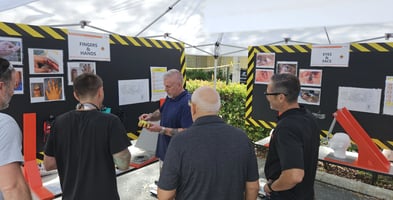
Thursday's optional shop tour at PSM's Jupiter facility gave attendees a firsthand look at the scale and capability required to support modern turbine fleets, including advanced repair processes, manufacturing operations, and quality control systems. Full PPE was provided, and shop and engineering personnel were available to answer detailed technical questions.
What Attendees Are Taking Home
Feedback from participants made it clear that AMC 2026 delivered on its promise. Operators left with:
- Actionable technical roadmaps for upgrading specific turbine models based on proven installations
- Direct access to PSM engineers who could answer detailed questions about their specific units
- Networking connections with peers facing similar challenges across user-only sessions
- Visibility into market trends shaping capacity planning and investment decisions over the next 5-10 years
- Professional development certificates for up to 20 hours (2 CEUs) for conference attendance and GT Fundamentals participation
For those who couldn't attend all sessions, PSM recorded the Day 2 main ballroom presentations and will make them available to all registered attendees, extending the value of the conference beyond the four days in Jupiter.
The Bigger Picture
AMC 2026 reinforced a fundamental shift happening across the power generation industry. For 15 years, demand was flat. Planning horizons were long. New equipment was available when needed. That world is gone.
The new reality is defined by surging load growth, supply chain constraints, regulatory uncertainty, and an installed base of gas turbines that must perform at levels beyond original design specifications.
PSM's "Proven Alternative" theme isn't marketing spin. It's a recognition that when operators need capacity, they can't wait. They need solutions that work, deployed by companies with the technical depth to execute reliably.
The conference made it clear that PSM is meeting that moment with mature technology, deep operational experience, and a service organization scaled to support fleets under pressure.
Missed AMC 2026? Recorded sessions from the main ballroom will be available to all registered attendees. For information about PSM's gas turbine optimization programs, lifecycle management services, and plant assessments, visit www.psm.com or contact your PSM representative.
Mark your calendar for AMC 2027, when the industry will reconvene to address the next phase of the retrofit revolution.