
The number has been circulating since April, and it's worth sitting with: gas turbine prices are...
Spring 2026 Outage Season: Why This Year Is Different
Spring outage season is approaching, and gas turbine maintenance teams recognize that 2026 will be markedly different from previous years. The installed base of gas turbines is now central to power generation. New turbine deliveries are backlogged until at least 2029, costs have tripled in two years, and manufacturing capacity is at 90% utilization. Meanwhile, data center demand is rising, grid operators seek dispatchable capacity, and operators must maximize performance from aging fleets not designed for sustained high-demand operation. Spring outages are no longer just routine maintenance. They are now strategic opportunities to add capacity, extend asset life, and prepare units for operating profiles that did not exist at commissioning.
The Market Forces Reshaping Outage Planning
Three converging trends are prompting operators to reconsider their approach to spring 2026 outages:
1. The Installed Fleet Is All We Have
For 15 years, U.S. power demand remained essentially flat. Replacement capacity was available when units went offline, and new turbines could be ordered with reasonable lead times. That environment has changed. U.S. electricity consumption is projected to exceed 4,260 billion kilowatt-hours in 2026, driven by data center growth, electrification, and industrial reshoring. AI-driven data centers alone are expected to require 22% more grid power by the end of 2025 compared to 2024, with projections showing demand could nearly triple by 2030. However, new turbines cannot be delivered before 2029. GE Vernova, Mitsubishi Power, and Siemens Energy all report backlogs of five to seven years. Wood Mackenzie calculated that gas turbine manufacturing capacity reached 90% utilization in 2025, creating bottlenecks that will persist. The implication for spring outages is clear: every megawatt of capacity unlocked from existing units is critical. Units previously considered for retirement or peaking service are now being pushed into extended baseload or cycling duty. Operators who planned routine inspections are now evaluating whether to bundle upgrades that increase output or extend inspection intervals. The installed fleet is not just important; it is the only available capacity for the next three to five years.
2. Operating Profiles Have Changed Dramatically
Gas turbines commissioned in 2005-2015 were designed for baseload duty in a relatively stable grid. Today, those same units are being cycled daily to balance renewable intermittency, ramped aggressively to respond to market signals, and operated at load points and ambient conditions that stress components in ways the original design never anticipated. Frequent startups accelerate low-cycle fatigue. Extended turndown operation changes combustion dynamics and exhaust temperatures. Rapid ramping creates thermal gradients that drive cracking in transition pieces and turbine nozzles. Spring outages allow operators to address the accumulated stress from these new operating modes. However, routine inspections designed for baseload duty do not always detect the failure mechanisms introduced by cycling and flexible dispatch. This year, expect to see more focus on:
- Combustion hardware condition assessment: Transition pieces, fuel nozzles, and combustor liners experiencing distress from cycling
- Hot gas path component cracking: Stage 1 nozzles and shrouds showing low-cycle fatigue from startups
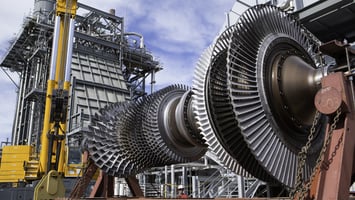
- Rotor inspections: Increased scrutiny on rotor bores and disk dovetails due to thermal cycling
Operators who recognize their units are operating outside the original design envelope are using spring outages to implement hardware upgrades that support the new duty cycle, rather than simply replacing failed components with identical parts.
3. Independent Service Providers Are Experiencing Record Demand
OEMs are overwhelmed. GE Vernova executed over 500 major outages (HGP+) in 2023, but its capacity is constrained by labor shortages, supply chain issues, and resource limitations that also affect deliveries of new equipment. As a result, operators are turning to independent service providers at unprecedented rates. While this trend is not new, the scale is unprecedented. Independent providers are now handling life-extension work, component upgrades, field services, and interim maintenance that would traditionally have been handled by OEMs. The backlog for qualified independents extends well into summer and fall 2026. For operators planning spring outages, this presents both opportunities and risks. Independents can often move faster, provide cost-effective alternatives, and offer specialized expertise. However, not all independent providers have the engineering depth, quality systems, or supply chain to execute complex outages reliably. In 2026, the key differentiators are not price but capability, track record, and the ability to deliver on commitments when there is no margin for schedule delays or rework.
What's Different About Spring 2026 Outages?
Shorter Planning Windows
Traditionally, operators finalize outage scopes six to nine months in advance, order parts, schedule contractors, and lock budgets.In 2026, operators face compressed planning windows as market conditions and operating requirements change faster than planning cycles can keep up. A unit scheduled for a routine combustion inspection in Q2 may need to remain online through the summer to meet grid reliability requirements. Alternatively, a plant not planning major work may discover a component issue mid-cycle and need to accelerate an outage. Service providers with pre-positioned inventory, flexible labor resources, and rapid mobilization capabilities have a significant advantage. Operators who wait until February or March to finalize spring outage scopes may find their preferred contractors already committed.
Increased Focus on Upgrades, Not Just Maintenance
Routine maintenance keeps units operational. Upgrades improve performance, extend operational life, and increase flexibility. During spring 2026 outages, more operators will bundle performance upgrades into planned maintenance windows:
- Advanced gas path components that add 6-10% output while extending inspection intervals
- Combustion system retrofits that improve fuel flexibility and reduce emissions
- Digital monitoring and controls upgrades that enable better dispatch flexibility and predictive maintenance
- Component life extension programs that defer major capital expenditures by maximizing the useful life of existing parts
The ROI calculation for upgrades has shifted. With new capacity costs tripling and delivery timelines extending into the next decade, investing in the installed base now makes economic sense in ways it did not three years ago. Hanwha Power's GTOP programs for 7F, 7EA, and 501F frames are specifically designed for this environment: proven technology, field-tested at scale, with installation timelines that fit standard outage windows.
Supply Chain and Labor Constraints
Parts that were readily available in 2023 now have extended lead times. OEM components for some frames are quoted at 12 to 16 weeks, compared with 4 weeks previously. Specialty tooling, lift equipment, and skilled labor are also constrained. Operators planning spring outages need to:
- Lock in parts orders early: Do not wait until the scope is finalized. Order long-lead components based on expected findings and hold them as spares if not used.
- Secure labor commitments: Qualified millwrights, field engineers, and specialized technicians are booked months in advance. Waiting until the outage mobilization to staff the job increases risk.
- Have contingency plans for emergent work: When borescope inspections reveal unexpected damage, ensure access to exchange components, emergency repair services, and engineering support that can respond within days.
Hanwha Power's North facility in Stuart. FL, which has been operational since late 2025, was built to address supply chain constraints. Advanced repair capabilities, warehousing, component exchange programs, and integrated logistics under one roof reduce lead times and provide operators with options when emergent issues arise during outages.
Balancing Outage Duration with Market Opportunity
Spring is traditionally a low-demand, low-price period, making it ideal for planned outages. However, in 2026, grid conditions are less predictable. Unseasonably warm weather can increase cooling demand in April and May. Data center load growth is creating baseline demand that does not follow historical seasonal patterns. Renewable curtailment during periods of high wind or solar can also create dispatch opportunities for flexible gas units, even in shoulder months. Operators are optimizing outage duration more aggressively. Compressing a 14-day outage to 10 days by staging work, pre-positioning parts, and running parallel workflows can save significant revenue if market prices spike unexpectedly. This requires closer coordination among operations, maintenance, and commercial teams, as well as service providers capable of executing efficiently without compromising quality or safety.
Strategic Considerations for Spring 2026
Should You Extend Inspection Intervals?
If a turbine is approaching an HGP inspection interval but monitoring data shows stable performance and mid-interval borescope inspections are clean, extension may be appropriate. The calculus has changed. Deferring a $1.5 million outage from spring 2026 to 2027 or 2028 creates financial flexibility and keeps capacity online during a period of high demand and limited alternatives. However, extension requires data. Monitoring combustion dynamics, tracking exhaust temperature, and documenting component condition trends are essential. Upgraded components designed for extended intervals are also necessary, rather than using original parts beyond their intended design life. Hanwha Power's field service team collaborates with operators to develop interval extension plans based on actual operating data, component condition, and duty cycle analysis, rather than relying on generic OEM recommendations that may not reflect the specific operating profile.
Should You Bundle Upgrades?
When opening the turbine for inspection or component replacement, the incremental cost of installing upgraded parts versus like-for-like replacements is often marginal, while the performance and lifecycle benefits can be substantial. Consider:
- Upgrading stage 1 buckets during a planned HGP adds cost, but doubles bucket life and can enable interval extensions that pay back the investment in one cycle
- Installing advanced transition pieces when replacing cracked originals costs more upfront, but eliminates a chronic failure mode
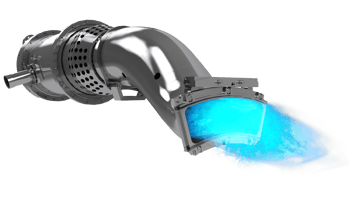
- Retrofitting FlameSheet combustion during a combustion inspection delivers lower emissions, better turndown, and fuel flexibility that increases dispatch revenue
The key consideration is not whether upgrades cost more than routine repairs, but whether the incremental investment delivers value over the unit's remaining operating life. In a market where new capacity is unavailable, and every megawatt is critical, this calculation increasingly favors upgrades.
Should You Pre-Position Spares?
Component exchange programs were once a convenience. In 2026, they are a risk mitigation strategy. When borescope inspections reveal unexpected cracking in a transition piece or nozzle assembly, having exchange components available enables repairs without extending the outage. Waiting for parts to ship can add days or weeks to the critical path, resulting in lost revenue and potential downtime during high-value dispatch periods. Hanwha Power's component exchange programs for combustion hardware, hot-gas-path components, and compressor parts provide operators with ready-to-install components backed by full engineering support and warranty.
What Hanwha Power Brings to Spring 2026 Outages
Hanwha Power specializes in the installed base. We do not manufacture new turbines. Instead, we optimize, repair, and extend the life of turbines that are currently maintaining grid stability. Our capabilities align directly with operator needs for spring 2026: Advanced Component Technology: GTOP, FlameSheet, and AutoTune solutions proven at scale across the F-class fleet and beyond Rapid Response Field Services: 24/7 mobilization, experienced technicians, and the tools and expertise to handle planned and emergent work Component Repair and Exchange: In-house precision manufacturing and repair for combustion hardware, hot gas path components, and compressor parts with lead times that fit outage schedules Engineering and Technical Support: Deep frame knowledge across GE, Mitsubishi, and Siemens platforms, with the ability to provide on-site support during inspections, troubleshooting, and upgrades Supply Chain and Logistics: Warehousing, kitting, and fulfillment capabilities that reduce lead times and eliminate the coordination headaches of managing multiple vendorsIf you are planning spring outages and require a partner who understands the current market, has the technical expertise to execute complex work, and can respond at the pace the grid now demands, we are ready to support you.
Planning a spring 2026 outage? Hanwha Power's outage planning and execution services help operators optimize scope, reduce downtime, and bundle upgrades that add value. Contact us to discuss your outage schedule, component condition, and strategic objectives for the units supporting your operations.