
For years, PSM's Asset Managers Conference conveyed a clear message of the "Retrofit Revolution"...
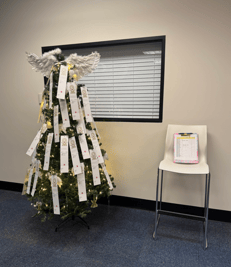
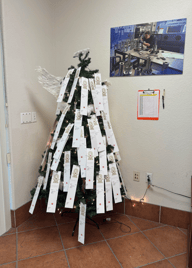
Every December, two decorated trees go up in PSM's facilities. They're not typical holiday decorations. They're covered with paper angels, each one representing a local child in need and their Christmas wish list.
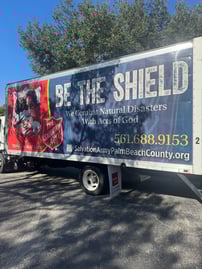
This year, PSM employees fulfilled wishes for 75 children through the Salvation Army Angel Tree program. Every single angel was claimed. Every request was met. Seventy-five kids will wake up Christmas morning to new toys, clothing, and shoes that their families couldn't otherwise afford.
It's easy to dismiss corporate charity as a PR exercise, but this one hits different. Employees don't participate because HR sends a reminder email. They participate because they want to. The trees are bare within days. People take multiple angels. They coordinate with coworkers to pool resources for bigger gifts. They shop on their own time and bring them back without fanfare.
The question worth asking is why. Why does a company that specializes in gas turbine aftermarket services care about kids getting Christmas presents? And why does it matter to customers, partners, and the broader industry?
Community Investment Reflects Operational Values
The connection between charity work and business performance isn't obvious until you think about what drives both: showing up, following through, and caring about outcomes.
When PSM employees commit to fulfilling an angel's wish list, they're making a promise to a child they've never met. They could ignore it. No one would know. But they don't, because the culture here doesn't tolerate half measures. If you say you'll do something, you do it. That applies whether you're replacing hot section components on a Frame 7 or buying clothing and a bicycle for a six-year-old.
The same mindset that drives employees to voluntarily take on Angel Tree requests is the mindset that shows up on job sites. When a customer calls with an emergency outage, PSM doesn't send a quote and disappear. We send people who care about solving the problem, who take ownership of the work, and who follow through until the unit is back online.
That's not a coincidence. Culture isn't compartmentalized. The values that define how a company treats its community are the same values that define how it treats its customers.
Why Local Matters
The Salvation Army Angel Tree program focuses on families in our immediate area. These aren't abstract statistics or distant causes. These are kids whose parents work in the same towns where PSM operates, shop at the same stores, and face the same cost-of-living pressures that affect everyone.
In an industry as geographically dispersed as power generation, it's easy to lose sight of local impact. Projects take teams across state lines. Customers are scattered nationwide. Supply chains are global. But PSM's workforce lives here. Our families are here. The schools, hospitals, and infrastructure that support our employees are funded by the same local economy we're investing in.
When PSM participates in programs like Angel Tree, it's not charity for charity's sake. It's recognizing that strong communities produce strong workforces, and strong workforces deliver better results for customers.
.jpg?width=201&height=268&name=Image%20(1).jpg)
The Broader Commitment
Angel Tree is one of the most visible initiatives, but it's not the only one. Throughout the year, PSM employees volunteer time and organize fundraisers for local charities. The commitment runs deeper than a single holiday drive.
This reflects a broader understanding: companies don't operate in a vacuum. The communities that provide our workforce, the infrastructure that supports our operations, and the social fabric that keeps things stable all depend on people choosing to invest time and resources beyond their immediate self-interest.
In the power generation industry, we talk a lot about reliability. Grid reliability. Equipment reliability. Supplier reliability. But reliability starts with people. And people who are engaged in their communities, who take ownership of problems beyond their job descriptions, and who follow through on commitments tend to be the same people you want on your team when a turbine goes down at 2 AM and the grid needs that unit back online by sunrise.
What This Means for Customers
When you contract with an aftermarket service provider, you're not just buying technical expertise. You're buying into a company's culture. You're trusting that the people who show up on-site will approach your project with the same care, accountability, and follow-through that they bring to everything else they do.
PSM's Angel Tree participation is a signal. It tells you that this is a company where people care about doing things right, where commitments matter, and where the expectation is that you show up and deliver, whether anyone is watching or not.
That culture translates directly to how projects get executed. It's why PSM technicians don't cut corners during inspections. It's why project managers stay on top of timelines and communicate proactively when issues arise. It's why engineers go the extra mile to troubleshoot complex problems instead of defaulting to the easiest solution.
The same employees who claimed angels off those trees are the ones designing your upgrades, managing your outages, and ensuring your units run reliably. The mindset is consistent.
The Bottom Line
Seventy-five kids will have a better Christmas because PSM employees chose to participate in Angel Tree. That's meaningful in itself. But it also reflects something deeper about how this company operates.
Industries like power generation run on trust. Customers trust that when you say you'll deliver, you will. Employees trust that leadership values more than just quarterly earnings. Communities trust that companies operating in their backyard will contribute, not just extract.
Angel Tree is a small piece of that trust equation, but it's an important one. It reinforces that PSM is a company where people follow through on commitments, where culture matters, and where doing the right thing is the baseline expectation, not an exception.
And when it comes to choosing a partner for critical turbine work, that culture is exactly what you want backing up the technical expertise.
PSM's commitment to our community reflects the same values we bring to every customer project: reliability, accountability, and follow-through. Learn more about how we support your operations.
For more information about supporting The Salvation Army's programs, visit Salvation Army West Palm Beach.